Your How to calculate energy content of food images are ready in this website. How to calculate energy content of food are a topic that is being searched for and liked by netizens today. You can Download the How to calculate energy content of food files here. Find and Download all royalty-free photos.
If you’re looking for how to calculate energy content of food pictures information connected with to the how to calculate energy content of food interest, you have pay a visit to the right site. Our website always gives you hints for seeking the highest quality video and picture content, please kindly search and locate more informative video content and images that match your interests.
How To Calculate Energy Content Of Food. The equation for calculating the energy content of a food source via calorimetry is as follows. Count up all these numbers and voila you have the energy content of your food. Therefore the total energy of one serving of the food is calculated by adding together the energy provided by the protein total fat carbohydrate and dietary fibre. Lets do an example here.
 Limiting Reagent Chemistry Tutorial Youtube Chemistry Tutorial School From pinterest.com
1 the components of food that provide energy protein fat carbohydrate alcohol polyols organic acids and novel compounds should be determined by appropriate analytical methods. Dietary ED foodbeverage Total energy kcal total weight g. Calculate carbohydrate NFE content of the food. The equation for calculating the energy content of a food source via calorimetry is as follows. To calculate the energy available from a food multiply the number of grams of carbohydrate protein and fat by. As the same amount of water is heated each time the temperature rise can be used to compare the amount of heat energy given off per gram of each foodstuff by dividing the rise by the mass of foodstuff burnt.
Calculate the energy released by this food type using this equation.
2 the quantity of each individual component must be converted to food energy using a generally accepted factor that expresses the amount of available. Multiply grams of carbohydrate in the food by 4 calories per gram. For classes familar with the equation q m CT where q is the heat energy m the mass of water heated C the specific heat of water 42 J g 1 deg 1 and ΔT the temperature rise this can be used. Calculate the energy value of a food based on its chemical composition. Resulting energy value by grams of food burned gives the energy content. Lets do an example here.
 Source: scienceaid.net
Energy joules Mass of water g 42 JgºC Temperature increase ºC The biggest source of error in calorimetry is usually caused by the unwanted loss of heat to the surrounding environment. Where Q heat energy absorbed in J Δt change in temperature in C m mass in grams and cp specific heat capacity which is 4184 JgC for water. Multiply grams of carbohydrate in the food by 4 calories per gram. Carbohydrate g100g 100 Moisture Protein Fat Ash CF Step 2. Count up all these numbers and voila you have the energy content of your food.
Source: pinterest.com
Calculate the energy content of the food in kilocaloriesgram. Lets do an example here. Using information on the nutrition label of the food sample calculate the food manufacturers kilocaloriesgram. Multiply grams of carbohydrate in the food by 4 calories per gram. Count up all these numbers and voila you have the energy content of your food.
 Source: pinterest.com
Calculate carbohydrate NFE content of the food. Multiply grams of carbohydrate in the food by 4 calories per gram. Dietary ED foodbeverage Total energy kcal total weight g. Compare your experimentally determined energy content in kilocaloriesgram to the calculated value. Determine how much of each component is in the food well come back to that later Multiply this value with the energy content for each specific component.
 Source: fi.pinterest.com
Calculate carbohydrate NFE content of the food. Regardless of whether the carbohydrate in food is sugar or starch all carbohydrates provide the body with 4 caloriesgram explains Dr. Energy Content of Foods All human activity requires burning food for energy. Calculate the energy content of the food in kilocaloriesgram. Using information on the nutrition label of the food sample calculate the food manufacturers kilocaloriesgram.
 Source: pinterest.com
For classes familar with the equation q m CT where q is the heat energy m the mass of water heated C the specific heat of water 42 J g 1 deg 1 and ΔT the temperature rise this can be used. 2 the quantity of each individual component must be converted to food energy using a generally accepted factor that expresses the amount of available. Lets do an example here. Component g 100 g Protein. Carbohydrate expressed as monosaccharide equivalent.
 Source: pinterest.com
Energy Content of Foods All human activity requires burning food for energy. Available carbohydrate by difference or by weight Total carbohydrate Dietary fibre Ethanol. Calculate the energy content of the food in kilocaloriesgram. Calculate the energy value of a food based on its chemical composition. 1 the components of food that provide energy protein fat carbohydrate alcohol polyols organic acids and novel compounds should be determined by appropriate analytical methods.
 Source: youtube.com
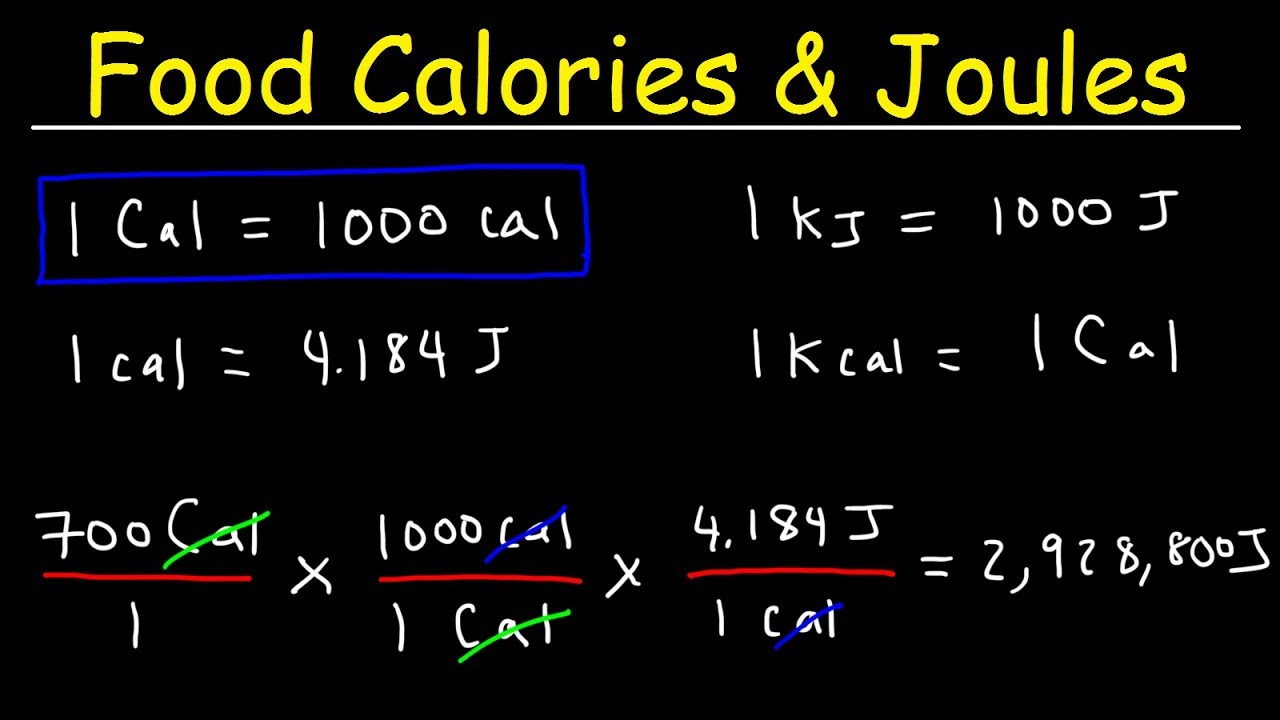
ED is calculated by dividing the energy content in kilocalories by weight of foods or foods beverages in g consumed. Calculating energy content is then done as follows. Multiply grams of carbohydrate in the food by 4 calories per gram. To calculate the energy available from a food multiply the number of grams of carbohydrate protein and fat by. A calorie is a unit of how much energy is in a given amount of food also called a kcal.
 Source: pinterest.com
Carbohydrate expressed as monosaccharide equivalent. Dietary ED foodbeverage Total energy kcal total weight g. Mannitol sorbitol xylitol also known as sugar alcohols. Resulting energy value by grams of food burned gives the energy content. Regardless of whether the carbohydrate in food is sugar or starch all carbohydrates provide the body with 4 caloriesgram explains Dr.
 Source: pinterest.com
Energy transferred to water 10 42 20 840 J. National Research Council National Academies Press Washington DC. Where Q heat energy absorbed in J Δt change in temperature in C m mass in grams and cp specific heat capacity which is 4184 JgC for water. When comparing different foods it is important to carry out a fair test. Component g 100 g Protein.
 Source: maximintegrated.com
Multiply grams of carbohydrate in the food by 4 calories per gram. Mannitol sorbitol xylitol also known as sugar alcohols. For classes familar with the equation q m CT where q is the heat energy m the mass of water heated C the specific heat of water 42 J g 1 deg 1 and ΔT the temperature rise this can be used. Energy transferred to water 10 42 20 840 J. National Research Council National Academies Press Washington DC.
 Source: pinterest.com
Mannitol sorbitol xylitol also known as sugar alcohols. Energy released J mass of water g x rise in temperature C x 42 Repeat steps 1-8 with different food types for. 1 the components of food that provide energy protein fat carbohydrate alcohol polyols organic acids and novel compounds should be determined by appropriate analytical methods. Where Q heat energy absorbed in J Δt change in temperature in C m mass in grams and cp specific heat capacity which is 4184 JgC for water. Multiply grams of carbohydrate in the food by 4 calories per gram.
 Source: pinterest.com
You will look for patterns in the amounts of energy released during burning of the different foods. Carbohydrate expressed as monosaccharide equivalent. Compare your experimentally determined energy content in kilocaloriesgram to the calculated value. Therefore the total energy of one serving of the food is calculated by adding together the energy provided by the protein total fat carbohydrate and dietary fibre. Where Q heat energy absorbed in J Δt change in temperature in C m mass in grams and cp specific heat capacity which is 4184 JgC for water.
 Source: pinterest.com
To calculate the energy available from a food multiply the number of grams of carbohydrate protein and fat by. To calculate the energy available from a food multiply the number of grams of carbohydrate protein and fat by. Using information on the nutrition label of the food sample calculate the food manufacturers kilocaloriesgram. Final temperatures the energy released can be calculated using the equation. Mannitol sorbitol xylitol also known as sugar alcohols.
 Source: pinterest.com
Determining the energy content of foods depends on the following. How to calculate the Energy available from foods. Using information on the nutrition label of the food sample calculate the food manufacturers kilocaloriesgram. Therefore the total energy of one serving of the food is calculated by adding together the energy provided by the protein total fat carbohydrate and dietary fibre. Energy Content of Foods All human activity requires burning food for energy.
 Source: pinterest.com
To calculate the energy available from a food multiply the number of grams of carbohydrate protein and fat by. A calorie is a unit of how much energy is in a given amount of food also called a kcal. Energy released J mass of water g x rise in temperature C x 42 Repeat steps 1-8 with different food types for. Lauralee Sherwood in her book Human Physiology Be sure not to include grams of fiber in your calculation – despite the fact. For classes familar with the equation q m CT where q is the heat energy m the mass of water heated C the specific heat of water 42 J g 1 deg 1 and ΔT the temperature rise this can be used.
 Source: nl.pinterest.com
In this experiment you will determine the energy released in kJg as various foods such as cashews marshmallows peanuts and popcorn burn. Component g 100 g Protein. These values are sourced from the Food Standards Code Standard 128. Carbohydrate expressed as monosaccharide equivalent. Therefore the total energy of one serving of the food is calculated by adding together the energy provided by the protein total fat carbohydrate and dietary fibre.
 Source: in.pinterest.com
Calculation of energy content 1. When comparing different foods it is important to carry out a fair test. Component g 100 g Protein. Energy joules Mass of water g 42 JgºC Temperature increase ºC The biggest source of error in calorimetry is usually caused by the unwanted loss of heat to the surrounding environment. Divide calories per serving by the number of grams in a serving 90 Cal 38 g 237 kilocalgram 7.
 Source: ib.bioninja.com.au
Where Q heat energy absorbed in J Δt change in temperature in C m mass in grams and cp specific heat capacity which is 4184 JgC for water. Determining the energy content of foods depends on the following. Energy joules Mass of water g 42 JgºC Temperature increase ºC The biggest source of error in calorimetry is usually caused by the unwanted loss of heat to the surrounding environment. The equation for calculating the energy content of a food source via calorimetry is as follows. Dietary ED foodbeverage Total energy kcal total weight g.
This site is an open community for users to submit their favorite wallpapers on the internet, all images or pictures in this website are for personal wallpaper use only, it is stricly prohibited to use this wallpaper for commercial purposes, if you are the author and find this image is shared without your permission, please kindly raise a DMCA report to Us.
If you find this site value, please support us by sharing this posts to your preference social media accounts like Facebook, Instagram and so on or you can also bookmark this blog page with the title how to calculate energy content of food by using Ctrl + D for devices a laptop with a Windows operating system or Command + D for laptops with an Apple operating system. If you use a smartphone, you can also use the drawer menu of the browser you are using. Whether it’s a Windows, Mac, iOS or Android operating system, you will still be able to bookmark this website.


